

Formula 1 is approaching a pivotal moment as it looks to address one of the biggest criticisms of its current regulations, the overwhelming influence of energy management. A crucial meeting is scheduled for 9 April between the FIA and engine manufacturers, and the sport is under pressure to act quickly, both to ‘save’ the current technical cycle and to determine the future direction of the sport.
At the heart of the issue is the growing disparity between the spectacle that fans expect and the reality that drivers are experiencing. Modern cars, which are heavily reliant on hybrid systems, are increasingly dictated by energy deployment strategies rather than outright performance. The balance now appears to have tipped too far.

MORE NEWS – Christian Horner to Audi F1 – “They need someone like him” says Montoya
Less electric, more combustion
One of the most immediate solutions being discussed is reducing electric power output.
Current systems deliver around 350 kW (476 hp) from the electric component, but proposals suggest reducing that figure to 200 kW (272 hp). The intention is not simply to reduce power, but to rebalance it by shifting more emphasis back onto the internal combustion engine.
This could solve the so-called ‘clipping’ problem, where drivers run out of deployable energy on straights, resulting in inconsistent performance and awkward racing dynamics. However, reducing electric output without compensation could result in slower, less exciting cars.
As the Italian website Autosprint confirmed today, a counter to this will be to increase energy recovery via the combustion engine from 200 kW to 350 kW during key phases. This would enable drivers to accelerate more aggressively for longer, restoring a more natural racing rhythm while preserving the hybrid identity that manufacturers value.
These changes are considered relatively quick fixes that could be introduced in time for upcoming races, such as the Miami Grand Prix. The aim is to build on the positives already seen this season, such as closer racing and improved aerodynamic stability, while removing the excessive constraints imposed by energy management.
MORE F1 NEWS – Ferrari crucial upgrades tested in Monza private test
Miami as a turning point
The Miami weekend is shaping up to be a critical checkpoint. By then, Formula 1 hopes to present a product that feels less constrained and more aligned with the sport’s traditional identity.
Drivers have already expressed concerns about the current situation, particularly in qualifying, where pushing to the absolute limit has been replaced by the careful deployment of energy. Instead of all-out laps, sessions are increasingly defined by efficiency rather than aggression, a shift that risks diluting one of the sport’s most exciting elements.
However, if the FIA and manufacturers can agree on swift regulatory changes, Miami could mark the beginning of a course correction, one that restores a sense of unpredictability and raw performance.
MORE NEWS – F1 cars now making overtake decisions without driver input
From V10 Dreams to Hybrid Reality
While short-term fixes are essential, the bigger question lies in Formula 1’s long-term direction. Discussions around the next engine formula, currently scheduled for 2031, are quietly resurfacing, with a growing appetite for simplification.
Mohammed Ben Sulayem has previously suggested returning to simpler, more emotionally engaging engines and has even referenced the iconic V10 era. However, the reality is more complex. Manufacturers such as Honda and Audi are committed to hybrid technology, so a complete return to combustion engines is unlikely.
Instead, a compromise is emerging in the form of a hybrid V8 engine powered by sustainable fuels. A 2.4-litre V8 configuration has been suggested as a possible option, reminiscent of the KERS-era engines used prior to the introduction of the current V6 turbo-hybrid units in 2014.
The earlier transition marked a significant shift, both technically and emotionally. The high-revving sound of Formula 1 engines, once a defining feature, was largely lost. A return to V8s could help to recapture some of that identity, while still aligning with modern sustainability goals.
MORE NEWS – Why McLaren could stop Mercedes running away with F1 2026
Balancing Innovation and Entertainment
The challenge for Formula 1 is clear: to maintain its position as a technological leader while ensuring that what happens on the track remains compelling. Hybrid systems are here to stay, but their role may need to be redefined.
Lighter, less complex engines could offer several advantages, including improved car handling and more consistent performance. Combined with sustainable fuels, they also offer a way for Formula 1 to become more environmentally responsible without compromising on spectacle.
The 9 April meeting will be a key indicator of how seriously Formula 1 is taking these concerns. If meaningful changes are agreed upon for both the present and the future, the sport could avoid a prolonged period of dissatisfaction.
Ultimately, the goal is to restore a fundamental principle: that Formula 1 should be about drivers pushing to the absolute limit rather than managing constraints imposed by overly complex systems.
MORE NEWS – Trouble with Russell? Antonelli speaks out
Would you like to see more TJ13 Formula 1 coverage? Add us to your favourites list on Google to receive trusted F1 news.
NEXT ARTICLE – Max Verstappen Considering Paid 2027 Sabbatical Amid F1 Frustrations
One thing was crystal clear at the recent 2026 Formula One Japanese Grand Prix, and that is Max Verstappen is a very unhappy man. In the FIA press conference he banished a journalist from The Guardian, refusing to answer questions until the offending pork pie hat had left the room.
Verstappen claims Giles Richards had ‘laughed in his face’ following the season finale in Abu Dhabi last season. Having fallen short by just 14 points of becoming only the second F1 driver to claim five consecutive titles, Richards reminded Max of his red mist in Spain where he appeared to ram the Mercedes of George Russell.
The resulting 10 second penalty issued by the race stewards probably cost Verstappen in the region of 9 points that day, so it was not a deciding incident for his season anyway. Red Bull team boss Laurent Mekies is reported to have had words with his star driver following corporate pressure from Austria over the image he was portraying of the Red Bull brand.
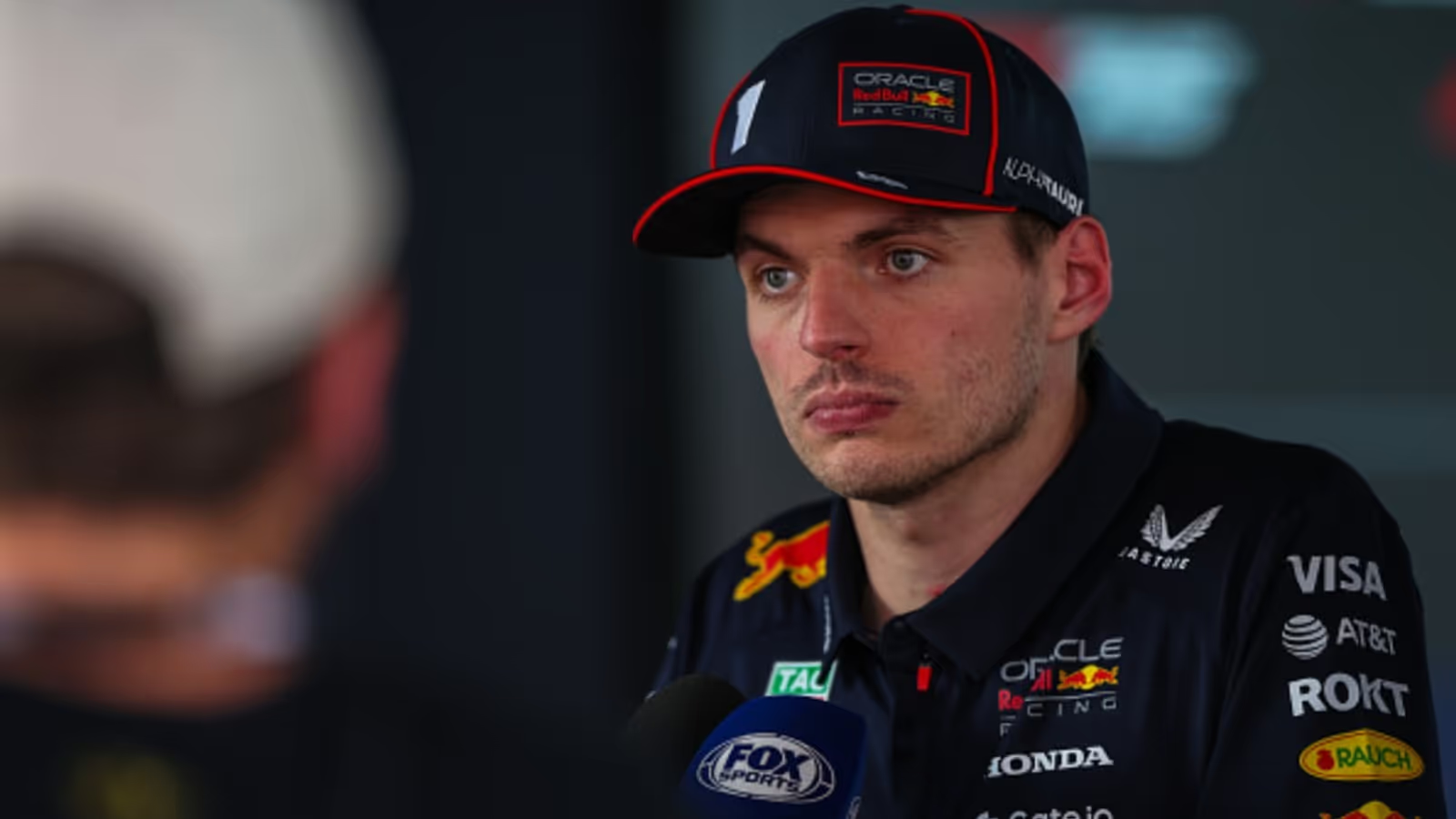
Max reprimanded for dismissing journalists
Thats in itself is a bizarre tale, given that Red Bull energy drinks brand, the extreme sports they have supported and the rebellious attitude of the Red Bull F1 team have always been associated with kicking over the traces. How times have changed since the death of Red Bull founder Didi Mateschitz. But we digress.
As if to make matters worse, Vertsappen had his worst racing weekend of the season. He was out qualified for the second time by new team mate Isack Hadjar and dumped out of the top ten shootout by rookie Arvid Lindblad in the Red Bull sister car. The RB22 car was “undriveable” repeated Max throughout the…CONTINUE READING THIS ARTICLE

The Judge, a nom de plume of an experienced F1 journalist and site founder with long-standing sources across the paddock. With over 30 years of experience in Formula 1 as an insider journalist, I have built trusted connections across the paddock, from race engineers and mechanics to senior team figures. At The Judge 13, I and a handful of trusted colleagues share exclusive Formula 1 news, expert analysis and behind-the-scenes stories you will not find in mainstream motorsport media.

Craig Alderson is Senior Editor at TJ13, where Craig oversees newsroom operations and coordinates editorial output across the site. With a background in online sports reporting and motorsport magazine editing, he plays a key role in maintaining consistency, speed, and accuracy in TJ13’s coverage.
During race weekends, Craig acts as desk lead, directing contributors, prioritising breaking stories, and ensuring timely publication across a fast-moving news cycle.
Craig’s work focuses heavily on real-time developments in the paddock, including team updates, regulatory decisions, and emerging controversies. This role requires a detailed understanding of Formula 1’s operational flow, from practice sessions through to race-day strategy and post-race fallout.
With experience managing editorial teams, Craig ensures that TJ13 delivers structured, reliable coverage while maintaining the site’s distinctive voice.
Craig has a particular interest in how information moves within the paddock environment, and how rapidly developing stories can be accurately translated into clear, accessible reporting for readers.
