
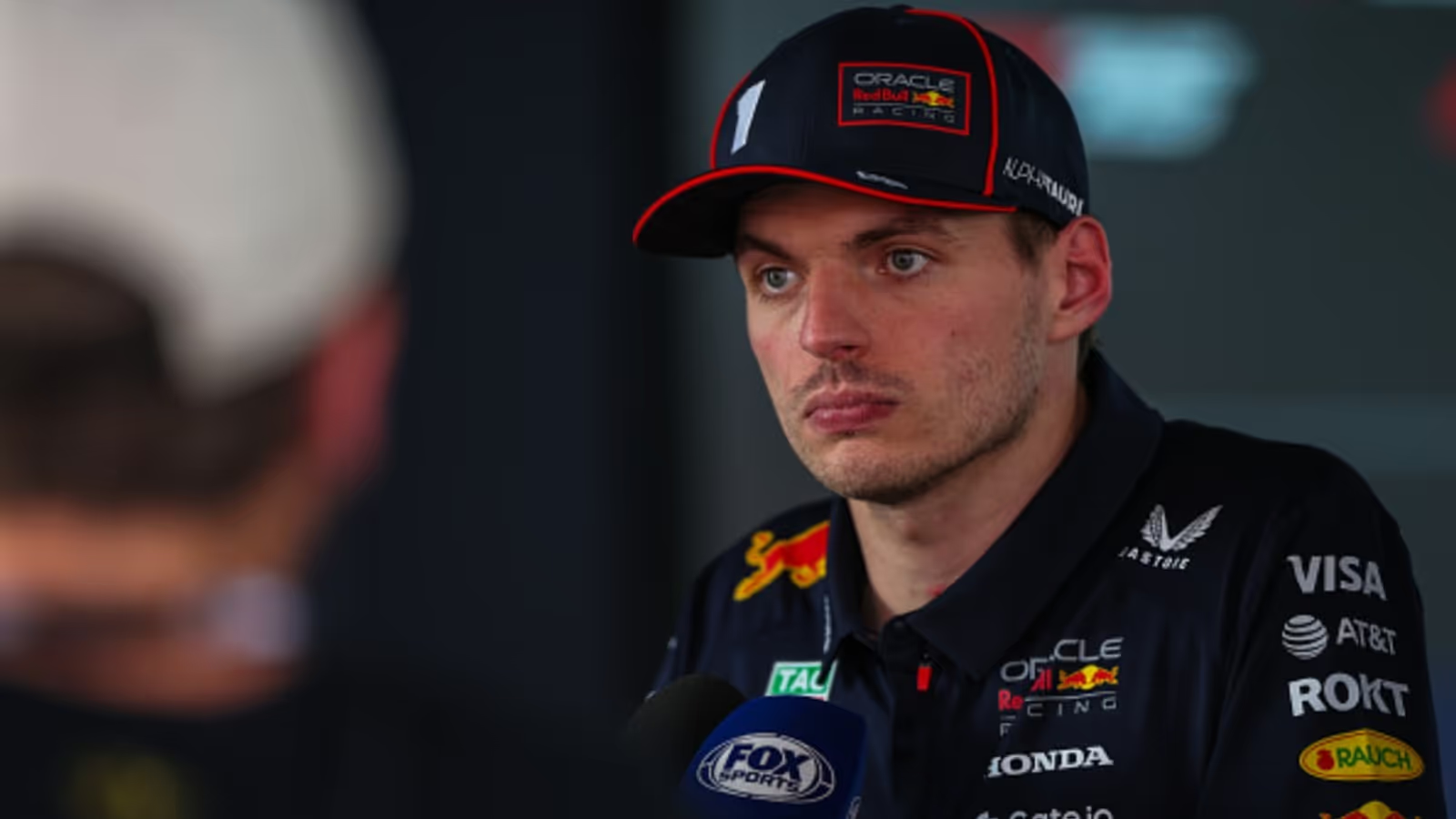
A proposed shift in Formula 1’s future engine regulations has significantly strengthened the belief that Max Verstappen will continue to compete in the sport beyond the current cycle. After weeks of speculation about his long-term future, the four-time world champion revealed in Montreal that he can support the direction in which the FIA is moving Formula 1.
The key development is an agreement in principle to increase the internal combustion engine’s role within the next generation of power units. This would establish a 60:40 balance between combustion and electric power, representing a significant departure from the previously planned 2027 regulations.
Verstappen made it clear that, to him, the shift is about more than just a technical adjustment. It directly impacts his motivation to continue competing in Formula 1.
He sees Formula 1 moving “in a very positive direction”
After returning to the paddock following his appearance in the Nürburgring endurance race, Verstappen spoke positively about Formula 1’s current trajectory.
In recent years, the Dutch driver has repeatedly criticised the current and future technical regulations, arguing that the sport was moving too far away from what drivers and fans wanted. Earlier this season, he said that major changes would be needed before he could feel enthusiastic about Formula 1’s long-term future.
However, that outlook appears to have softened following discussions that intensified after the Miami Grand Prix. The FIA announced that manufacturers and stakeholders had reached a preliminary agreement to rebalance future engines towards greater combustion-engine influence.
When asked about the proposal, Verstappen responded:
“It is absolutely heading in a very positive direction.”
He later added that this was precisely the kind of change he had hoped Formula 1 would pursue.
Would you like to see more TJ13 Formula 1 coverage? Add us to your favourites list on Google to receive trusted F1 news.
Changes to engine regulations could influence Verstappen’s future
The proposal’s significance extends beyond technical philosophy. Verstappen openly acknowledged that the revised direction increases the likelihood of his continued presence on the Formula 1 grid in the coming years.
According to Verstappen, the quality of the racing product remains central to his decision-making process. While he stopped short of giving definitive guarantees regarding 2027, his comments were among the clearest indications yet that he is optimistic about the future of Formula 1.
Until now, Verstappen had consistently avoided offering firm commitments about his long-term plans. Repeatedly fuelling speculation about an early exit or reduced interest in continuing deep into the next regulation cycle, his frustration with the sport’s trajectory was clear.
Now, however, the tone has noticeably changed.
Verstappen explained that he is happier with the proposed regulations because they improve what he considers to be the overall Formula 1 product. He also stressed that his concerns were never solely related to team competitiveness, but rather to the wider direction of the championship itself.
Negotiations over the final engine details are still ongoing
Despite the optimism, the agreement has not yet been finalised. Significant negotiations are reportedly taking place behind the scenes regarding the exact technical implementation of the future power units.
Discussions reportedly include adjustments to fuel flow and a possible reduction in electrical deployment by approximately 50 kilowatts. Several manufacturers are believed to prefer sticking closer to their original concepts, as minimal change could preserve the competitive advantages gained during development.
Verstappen admitted that this political aspect remains a concern.
“That absolutely must happen.”
He warned that manufacturer interests should not prevent Formula 1 from making changes that would benefit the sport as a whole.
Verstappen revealed his involvement in wider FIA discussions
He also disclosed that he has been directly involved in discussions with Formula One Management, the FIA, and fellow drivers regarding the future of the championship.
According to the Red Bull driver, experienced competitors naturally gain a stronger voice within the sport as their achievements grow. However, he insisted that the conversations were not centred around personal interests, but about improving Formula 1 for everyone involved.
This makes his recent comments particularly significant. For several seasons, Verstappen’s public stance has often reflected his frustration with the direction of Formula 1 regulations. In Montreal, however, relief appeared to replace much of that negativity.
Although no formal confirmation has been given regarding his participation beyond the current rules cycle, Verstappen’s message is now considerably clearer: if Formula 1 continues down this revised technical path, many of his major concerns will disappear.
Would you like to see more TJ13 Formula 1 coverage? Add us to your favourites list on Google to receive trusted F1 news.

Craig Alderson is Senior Editor at TJ13, where Craig oversees newsroom operations and coordinates editorial output across the site. With a background in online sports reporting and motorsport magazine editing, he plays a key role in maintaining consistency, speed, and accuracy in TJ13’s coverage.
During race weekends, Craig acts as desk lead, directing contributors, prioritising breaking stories, and ensuring timely publication across a fast-moving news cycle.
Craig’s work focuses heavily on real-time developments in the paddock, including team updates, regulatory decisions, and emerging controversies. This role requires a detailed understanding of Formula 1’s operational flow, from practice sessions through to race-day strategy and post-race fallout.
With experience managing editorial teams, Craig ensures that TJ13 delivers structured, reliable coverage while maintaining the site’s distinctive voice.
Craig has a particular interest in how information moves within the paddock environment, and how rapidly developing stories can be accurately translated into clear, accessible reporting for readers.
