
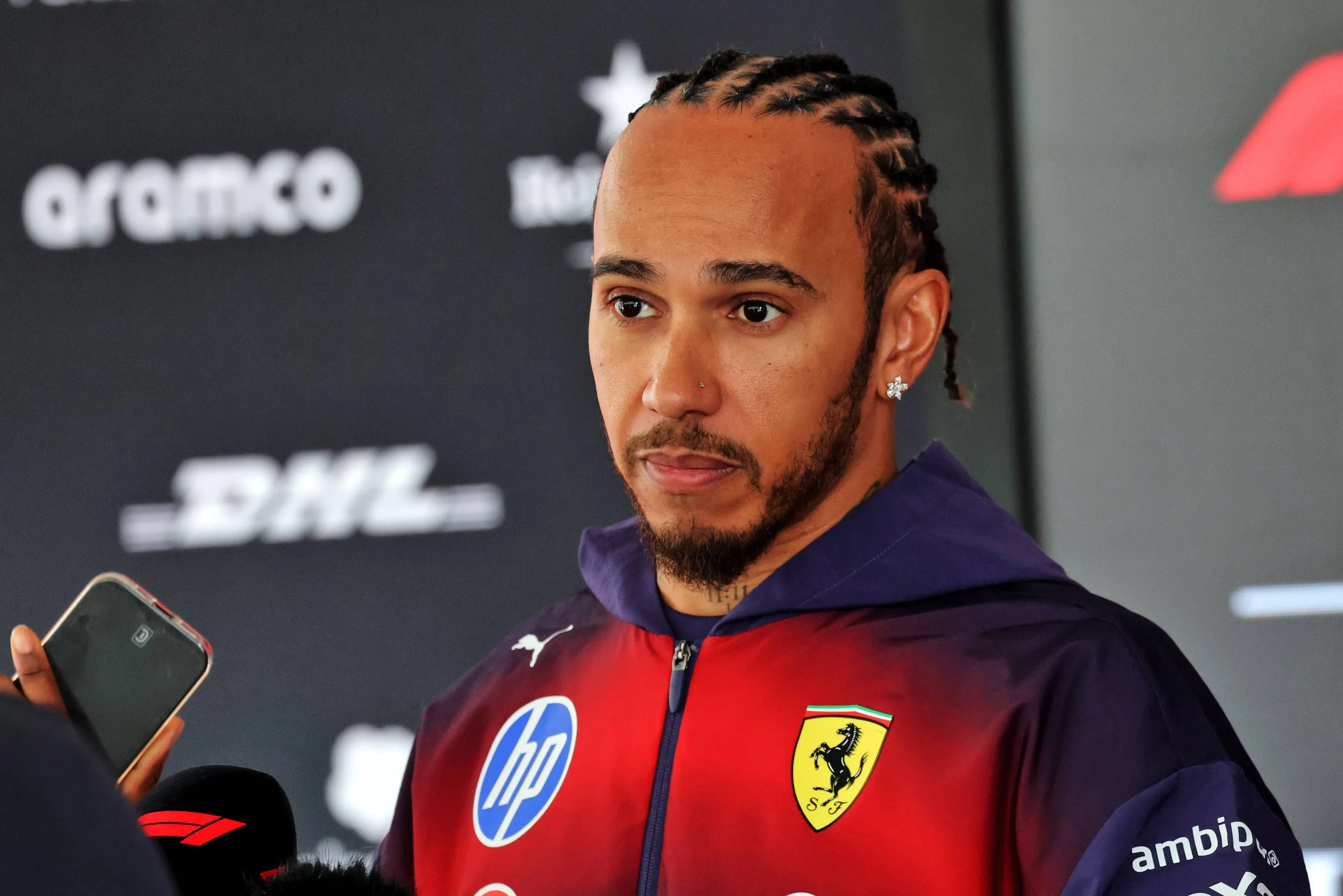
Lewis Hamilton, Max Verstappen and Carlos Sainz unite in criticism as Spa exposes Formula 1’s 2026 rules – Formula 1’s new technical regulations came under renewed scrutiny following qualifying for the 2026 Belgian Grand Prix, with Lewis Hamilton, Max Verstappen and Carlos Sainz all voicing concerns over the way the current cars perform at Spa-Francorchamps.
The iconic Belgian circuit highlighted the limitations of the new power unit package, leaving drivers lifting off the throttle, conserving battery energy and, in some cases, driving sections of one of Formula 1’s most famous tracks with significantly reduced power.
While Formula 1’s governing body introduced changes ahead of the season to reduce concerns surrounding energy deployment, Spa’s unique layout has once again exposed the weaknesses of the regulations. The circuit’s long straights and limited heavy braking zones make it difficult for drivers to recover enough electrical energy, forcing them into unusual driving techniques during qualifying laps.
Several leading drivers admitted the experience has fundamentally changed the character of Spa-Francorchamps, with criticism now extending beyond performance to concerns about the spectacle Formula 1 is producing.
Spa’s layout exposes the biggest weakness of the 2026 regulations
The 2026 Formula 1 regulations dramatically increased the electrical contribution of the hybrid power units, creating a near 50-50 split between electric power and the internal combustion engine.
While the concept was designed to improve efficiency and sustainability, tracks with limited energy recovery opportunities have become problematic.
Spa-Francorchamps is perhaps the clearest example
With only a handful of major braking zones across its seven-kilometre layout, drivers struggle to harvest enough energy to complete a full qualifying lap with maximum deployment. As a result, they are often forced to lift off the throttle earlier than normal to allow the car to recover energy, while some even downshift on straights to maximise battery regeneration.
The phenomenon, commonly referred to as “superclipping,” has become increasingly visible throughout the season but reached its most extreme level during qualifying in Belgium.
Rather than attacking every corner flat out, drivers found themselves managing energy throughout the lap, fundamentally altering how one of Formula 1’s most celebrated circuits is driven.
Carlos Sainz questions how the regulations were ever approved
Williams driver Carlos Sainz delivered one of the strongest criticisms after qualifying, admitting the current generation of cars has removed much of the enjoyment from driving at Spa.
“I think no one enjoys the qualifying round as much as we did last year. I think it is clear that we lost quite a bit with these cars at Spa.”
The Spaniard was also careful not to dwell solely on the negatives, acknowledging Formula 1 continues to grow despite the issues.
“That being said, I don’t want to keep belittling my own sport, because that gets us nowhere. So I think we all know that this isn’t good enough, it has to change, it will evolve.”
Sainz expressed confidence improvements will arrive over the coming seasons but questioned how the original simulations leading to the regulations ever received approval.
“Hopefully, next year will be a step better, and the year after that another step better. Anyone who saw these simulations in 2022 and 2023 and looks at them and says: how can we ever accept that? I have to look back at what happened there, because it should never have happened.”
“But now that we are here, we have a number of exciting races. The sport is growing, so it is time to move on.”
His comments reflect a growing belief among drivers that the shortcomings seen at Spa were foreseeable long before the regulations came into force.
Lewis Hamilton delivers blunt verdict on Formula 1 decision-makers
Ferrari driver Lewis Hamilton was asked whether the problems seen during qualifying matched the original simulations completed before the regulations were introduced.
The seven-time world champion suggested the warning signs had been obvious from the beginning.
“I am quite sure of it, yes. We saw it immediately.”
Hamilton then delivered a pointed remark aimed at those responsible for approving the regulations.
“I don’t know who made the decision, but whoever it is, that person will remain employed.”
Although brief, Hamilton’s comments echoed concerns that many within the paddock have held since the regulations were first proposed, namely that simulation data appeared to indicate energy deployment would become a major issue at certain circuits.
Max Verstappen says Spa is now “a completely different” circuit
Red Bull driver Max Verstappen has been among the most vocal critics of the 2026 regulations throughout the season, although after qualifying he admitted he was trying to avoid repeatedly attacking the rules.
Fernando Alonso had warned before the Belgian Grand Prix weekend that parts of Spa’s middle sector could effectively become a no-deployment zone, and Verstappen confirmed those fears after qualifying.
“On most of Sector 2, you run purely on the combustion engine. That is about 450, 500 hp, roughly what a Formula 3 car has, but with F1 downforce. You can imagine that it isn’t very exciting to drive.”
Verstappen then joked about the consequences of continually criticising the regulations.
“Honestly, I don’t want to sit here complaining again, because someone will probably shoot me outside.”
“I’m just trying to make the best of it, even though it’s not what I enjoy doing in Formula 1.”
The Dutchman also explained the issue extends far beyond the famous Pouhon corner, which has become a focal point in discussions about the new cars.
“It’s not just Pouhon, it’s the whole track. It’s a completely different Spa, but I’m adapting to it mentally.”
Pole-sitter Kimi Antonelli reached a similar conclusion, explaining that drivers were already out of electrical deployment from the apex of Pouhon onwards, making one of Formula 1’s fastest corners feel noticeably different compared to previous seasons.
Why the criticism matters
The strength of the reaction from Hamilton, Verstappen and Sainz is significant because all three have extensive experience across multiple generations of Formula 1 machinery. Their criticism is not centred on outright performance or lap times, but on the way the regulations have altered the driving experience at one of the sport’s most iconic venues.
The FIA has already introduced measures designed to reduce excessive energy harvesting and deployment issues, but Spa-Francorchamps demonstrated that further work may be required as Formula 1 continues refining the 2026 rules.
With teams, manufacturers and the FIA expected to review the first season under the new regulations, the Belgian Grand Prix has provided perhaps the clearest evidence yet that additional changes could be needed to preserve the characteristics that have made circuits such as Spa legendary among drivers and fans alike.
Would you like to see more TJ13 Formula 1 coverage? Add us to your favourites list on Google to receive trusted F1 news.

The Judge, a nom de plume of an experienced F1 journalist and site founder with long-standing sources across the paddock. With over 30 years of experience in Formula 1 as an insider journalist, I have built trusted connections across the paddock, from race engineers and mechanics to senior team figures. At The Judge 13, I and a handful of trusted colleagues share exclusive Formula 1 news, expert analysis and behind-the-scenes stories you will not find in mainstream motorsport media.
