
“This is causing real headaches.” claims Former Red Bull chief mechanic – The ongoing upheaval at Red Bull Racing shows no signs of slowing down, and concern is growing both within and outside the team. What initially seemed like a series of isolated departures is now being seen as part of a wider structural shake-up that could have long-lasting consequences for the Formula 1 powerhouse.
Former Red Bull chief mechanic Kenny Handkammer has added to these concerns by warning that the situation could deteriorate further. Speaking on The Two Mechanics podcast, he suggested that even more key figures could be on their way out, describing the situation as deeply troubling.
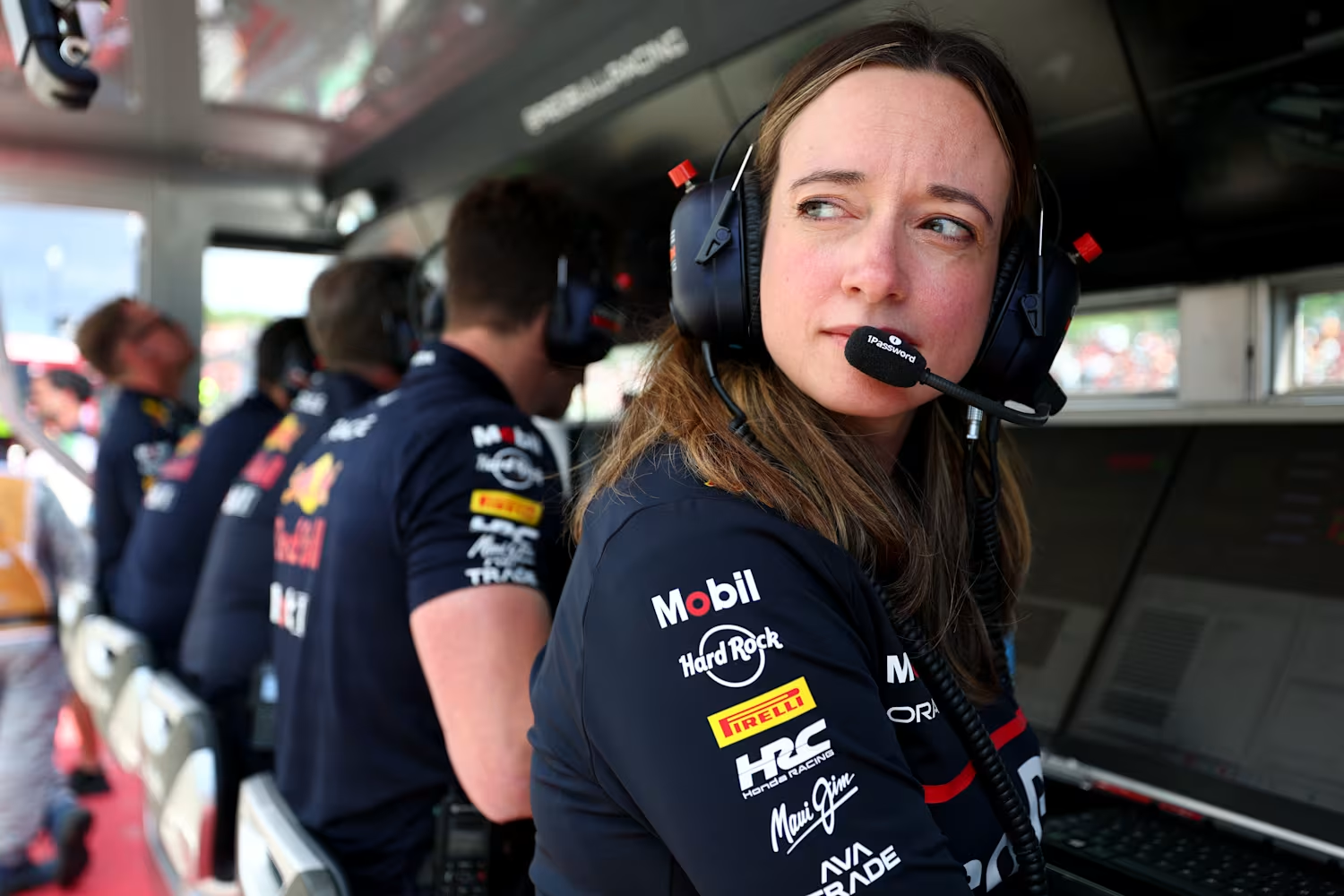
“There are reports that Hannah Schmitz will also be leaving,” he said. “All these key personnel and discussions about more departures to follow. It’s really worrying. How do you rebuild the team?”
Would you like to see more TJ13 Formula 1 coverage? Add us to your favourites list on Google to receive trusted F1 news.
Red Bull’s growing list of departures
Over the past year, Red Bull has seen an extraordinary number of high-profile exits. The departing figures include some of the most influential people behind the team’s recent success, raising serious questions about continuity and stability.
The biggest names to leave or prepare to leave include Christian Horner, Helmut Marko, Adrian Newey and Will Courtenay. Each of them played a crucial role in establishing Red Bull as one of the most successful teams in modern Formula 1. Their departures alone would represent a significant period of transition, but the changes have not stopped there.
Race engineer Gianpiero Lambiase is also set to leave, having confirmed his move to McLaren for 2028. His close working relationship with Max Verstappen made him a central figure in Red Bull’s trackside operations, so his departure will leave another significant void.
Taken together, the scale of these changes has led many to describe the situation as unprecedented in the team’s history.
MORE NEWS – F1 rules under pressure: Helmut Marko raises urgent doubts over new changes
Is Hannah Schmitz next?
Attention is now turning to chief strategist Hannah Schmitz, who is widely regarded as one of the sharpest tactical minds on the Formula 1 grid. Schmitz has played a key role in several of Red Bull’s most decisive race victories, frequently making bold decisions under pressure that have paid off.
However, recent reports suggest that Ferrari may be interested in recruiting her, sparking speculation that she could be the next high-profile name to leave Milton Keynes. While nothing has been confirmed, the mere possibility has added to the sense of uncertainty surrounding the team.
Handkammer’s comments reflect a growing fear that Red Bull could lose not just individuals, but also the collective expertise that underpinned its success.
MORE F1 NEWS – FIA ban Mercedes F1 engine trick
Rebuilding a dynasty?
The key question now is how Red Bull can recover from such an extensive internal shake-up. Formula 1 success rarely hinges on a single individual; rather, it is built on a complex network of specialists working in harmony. Losing multiple senior figures in a short period risks disrupting that balance.
While replacements can be found, rebuilding chemistry, trust and institutional knowledge takes time, something in short supply in the relentless world of Formula 1.
If further departures materialise, particularly of someone as influential as Schmitz, the challenge will only intensify. What was once a stable and dominant operation is now facing a period of uncertainty that could redefine its competitive future.
NEXT ARTICLE – Fans ditching F1 as viewer numbers collapse
As predicted by the independent F1 press before the season opener, the all-new 2026 era is rapidly descending into farce. A huge plunge in viewer numbers following the Japanese Grand Prix makes plain the fans are voting with their feet.
The fundamental architecture of the 50/50 power units was flawed from its inception. As Stefano Domenicali, F1 supremo, admitted in 2025, the resulting regulations were a “political” decision based on attracting more manufacturers into the sport.
Whilst the FIA working party on the next generation of F1 engines was formed in 2017, it was in 2020 that the first mention of the all-new 50/50 power unit was made. As the name suggests, the power contribution from the internal combustion engine would be 50%, as it would be from the battery.

F1 manufacturers mis-read the future of road cars
A bold new step into greater efficiency and the electrified future was the intention, yet increasing the current electrical output by three times was always going to be ambitious. For many auto manufacturers who did not believe in the coming of the EV revolution, hybrids would be the bulk of the future road cars they produced.
And whilst hybrids have become a transitional technology in the auto industry, they have significant disadvantages compared to either the internal combustion engine or full electric cars. They contain the bulk of both an internal combustion engine along with the weight of a battery and, given the average person is…CONTINUE TO READ THIS STORY

Craig Alderson is Senior Editor at TJ13, where Craig oversees newsroom operations and coordinates editorial output across the site. With a background in online sports reporting and motorsport magazine editing, he plays a key role in maintaining consistency, speed, and accuracy in TJ13’s coverage.
During race weekends, Craig acts as desk lead, directing contributors, prioritising breaking stories, and ensuring timely publication across a fast-moving news cycle.
Craig’s work focuses heavily on real-time developments in the paddock, including team updates, regulatory decisions, and emerging controversies. This role requires a detailed understanding of Formula 1’s operational flow, from practice sessions through to race-day strategy and post-race fallout.
With experience managing editorial teams, Craig ensures that TJ13 delivers structured, reliable coverage while maintaining the site’s distinctive voice.
Craig has a particular interest in how information moves within the paddock environment, and how rapidly developing stories can be accurately translated into clear, accessible reporting for readers.
