
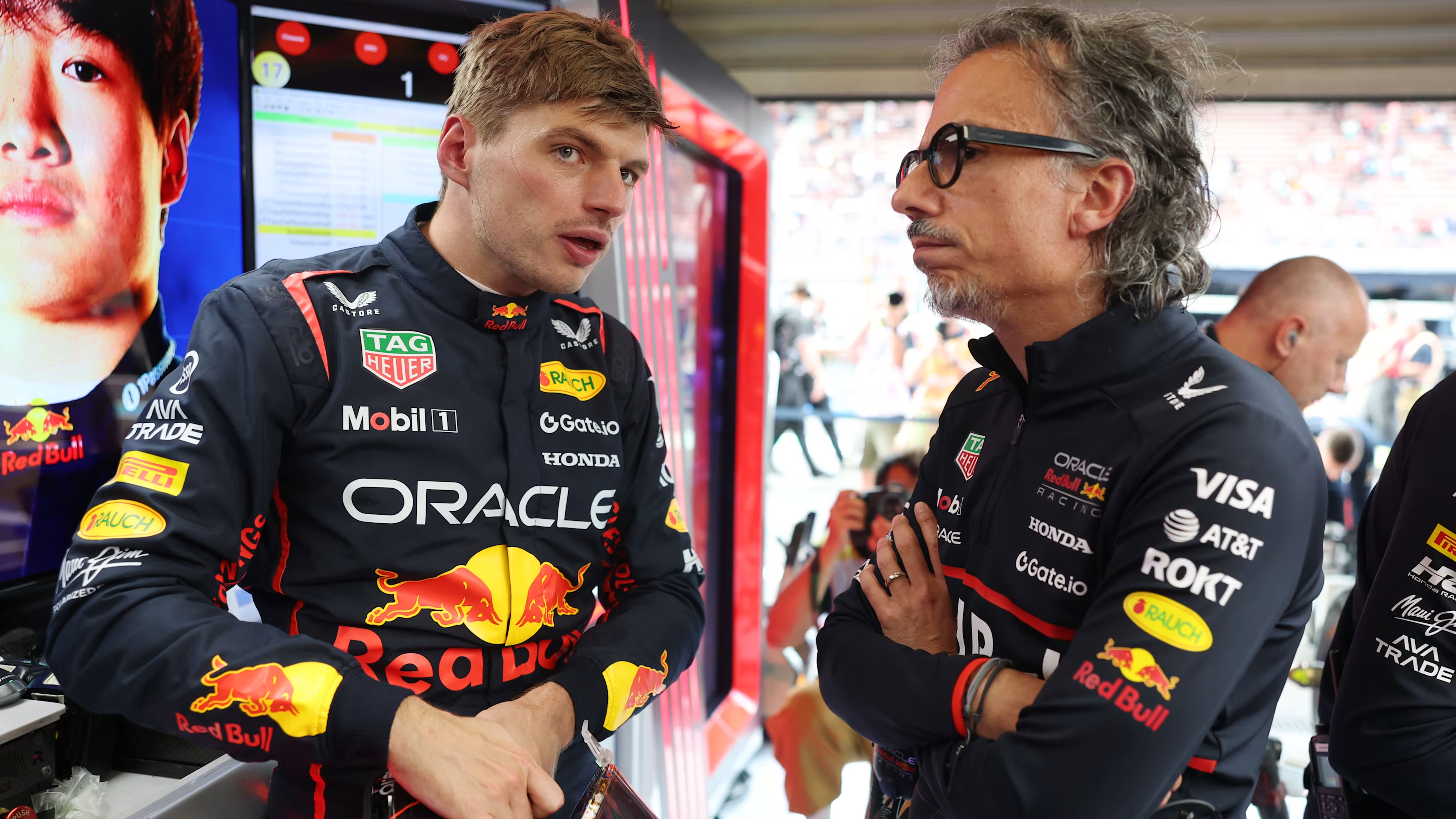
Max Verstappen has criticised Red Bull’s strategy and persistent technical problems after finishing third at the United States Grand Prix, revealing that the team changed its planned tyre approach without prior agreement. The Dutchman was particularly frustrated by an unexpected second stint on soft tyres, inconsistent engine braking and difficulties with gear changes that affected his performance throughout the race.
Speaking to Viaplay after the race in Austin, Verstappen made clear that his podium finish had done little to improve his mood. Although he secured third place, the four-time world champion believed Red Bull had made several decisions that compromised his afternoon.
“Yes, I’ve had more enjoyable races,” Verstappen admitted when asked whether it had been a frustrating afternoon.
“Actually, not very much went right. The start didn’t go well and the tyre choice wasn’t good.”
Verstappen challenges Red Bull’s tyre strategy
Verstappen’s strongest criticism concerned Red Bull’s decision to run a soft-soft-medium tyre sequence, which differed from the strategy he understood had been agreed before the race.
“The way we did it wasn’t good either, with soft-soft-medium. That wasn’t agreed upon beforehand, so I don’t quite understand why that was the case,” he said.
The initial plan had been to start on soft tyres before switching to the medium compound, with hard tyres intended for the final phase of the race. However, Verstappen was fitted with another set of soft tyres after his opening stint, a decision that immediately made a two-stop strategy more predictable to their rivals.
“I wanted to know how much I could fight with Charles or not. When they told me how far behind him he was and how much he was gaining per lap, there was no point in fighting with Charles, because then I would have lost the spot to Lewis.”
Verstappen indicated that the decision to use soft tyres for a second consecutive stint required further discussion with the team.
“We had agreed on medium,” he said of the first pit stop. “I have to talk about that, because I have no idea why this was the case.”
Engine problems undermine Verstappen’s race
The tyre strategy was only part of the problem. Verstappen also revealed that engine-related difficulties had affected him during qualifying and continued throughout Sunday’s race.
“I also had too many problems with the engine, but that was already the case in qualifying,” he explained.
One of the most significant issues involved inconsistent engine braking, which affects how the car slows when the driver lifts off the accelerator. At times, Verstappen struggled to get the car to rotate properly into corners, while at others the response was too aggressive.
“Sometimes I didn’t have enough engine braking in a corner, so the car pushed through, and at other times it was very aggressive. Sometimes it didn’t shift properly, so I can’t really make heads or tails of it. That much is clear.”
The problems were particularly noticeable towards the end of the opening stint and during the early stages of the second. Verstappen said the inconsistency had made it difficult to drive at a predictable level throughout the weekend.
“I’m not going to complain every lap, but it just wasn’t good all weekend, and certainly not in the race,” he concluded.
Late Virtual Safety Car helps secure podium
Red Bull’s strategic difficulties also left Verstappen as the only driver among the top six without hard tyres during the closing stages.
Asked about the decision not to fit him with the harder compound, he responded bluntly: “Yeah, they didn’t put them on me.”
Verstappen also acknowledged that the late Virtual Safety Car had helped him retain third place, making his result less satisfying given the problems he had encountered.
When Viaplay suggested that the neutralisation had contributed to his podium finish, he agreed.
“Yes, absolutely. That is quite clear. Ultimately, it doesn’t matter that much whether you finish third or fourth.”
The result was therefore a mixed outcome for Red Bull. Verstappen collected valuable championship points, but the performance exposed weaknesses in both the team’s execution and the car’s consistency.
Hamilton threat shaped Verstappen’s decisions
Verstappen also explained why he had been unwilling to engage in a prolonged fight with Charles Leclerc while running ahead of the Ferrari driver.
His race engineer, Tom Hart, provided information about the gap to Lewis Hamilton and how quickly the Ferrari was closing. Verstappen concluded that fighting Leclerc could have left him vulnerable to Hamilton, forcing him to prioritise protecting his position rather than attempting another overtake.
He ultimately finished with a one-second advantage over the second Ferrari.
Viaplay interviewer Chiel van Koldenhoven attempted to finish the conversation by highlighting Verstappen’s overtaking moves on Leclerc and Lando Norris. However, the Red Bull driver remained unconvinced that there was much to celebrate.
“Those are two positive points against a lot of negative points in the race,” Verstappen replied.
His comments leave Red Bull facing questions about its strategy decisions and the reliability of its technical package. While third place represented a respectable points finish, Verstappen’s frustration suggested that the team’s internal discussions after Austin would focus on much more than the final result.
Would you like to see more TJ13 Formula 1 coverage? Add us to your favourites list on Google to receive trusted F1 news.

The Judge, a nom de plume of an experienced F1 journalist and site founder with long-standing sources across the paddock. With over 30 years of experience in Formula 1 as an insider journalist, I have built trusted connections across the paddock, from race engineers and mechanics to senior team figures. At The Judge 13, I and a handful of trusted colleagues share exclusive Formula 1 news, expert analysis and behind-the-scenes stories you will not find in mainstream motorsport media.

Craig Alderson is Senior Editor at TJ13, where Craig oversees newsroom operations and coordinates editorial output across the site. With a background in online sports reporting and motorsport magazine editing, he plays a key role in maintaining consistency, speed, and accuracy in TJ13’s coverage.
During race weekends, Craig acts as desk lead, directing contributors, prioritising breaking stories, and ensuring timely publication across a fast-moving news cycle.
Craig’s work focuses heavily on real-time developments in the paddock, including team updates, regulatory decisions, and emerging controversies. This role requires a detailed understanding of Formula 1’s operational flow, from practice sessions through to race-day strategy and post-race fallout.
With experience managing editorial teams, Craig ensures that TJ13 delivers structured, reliable coverage while maintaining the site’s distinctive voice.
Craig has a particular interest in how information moves within the paddock environment, and how rapidly developing stories can be accurately translated into clear, accessible reporting for readers.
