
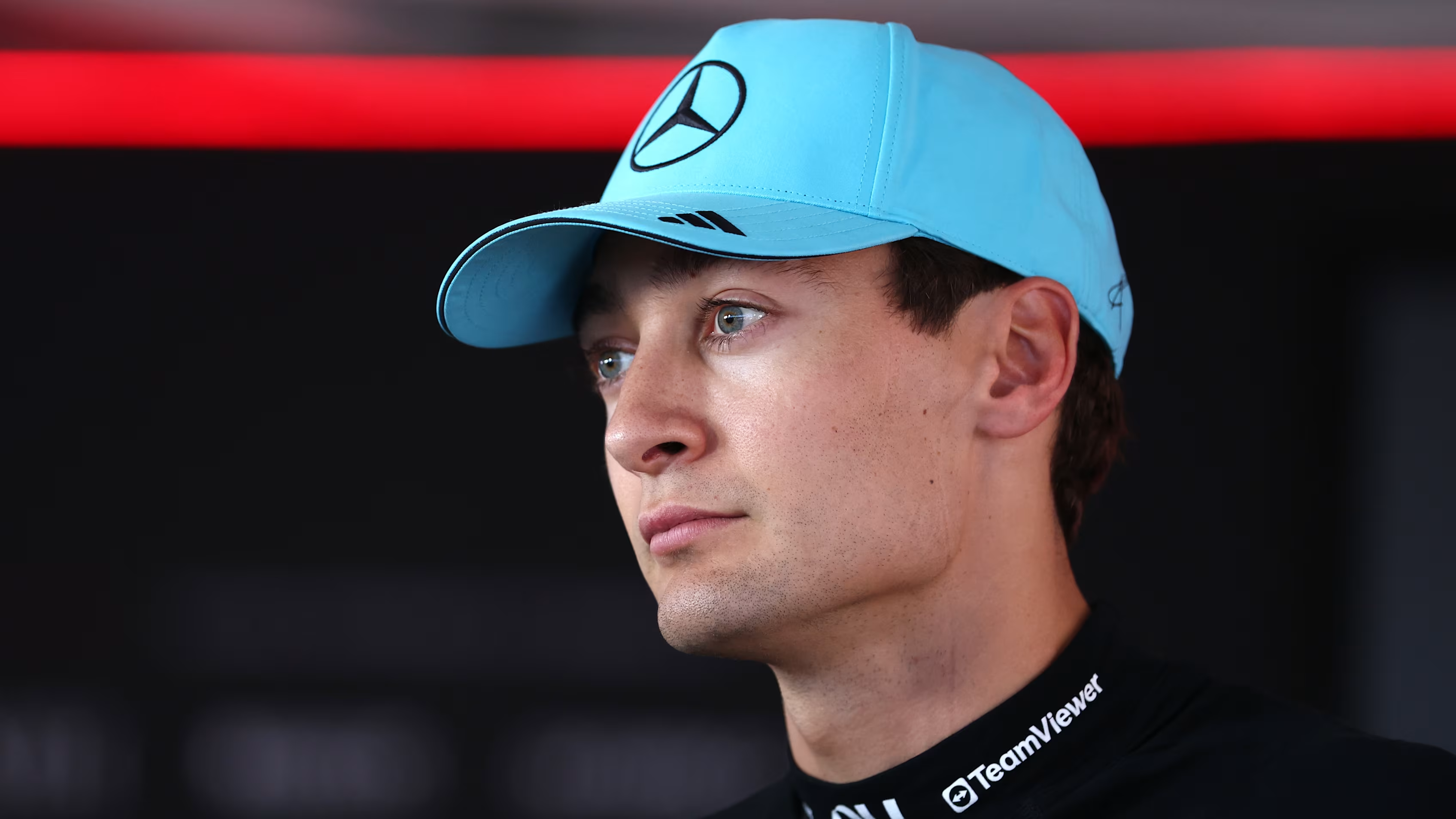
George Russell could face two separate grid penalties in the coming races after his Mercedes suffered a power-unit failure during the Bahrain Grand Prix at Sepang in Malaysia. The retirement was already a major blow to Russell’s Formula 1 title hopes, but the resulting pressure on his power-unit allocation could now create an additional problem for Mercedes.
Russell was running third, directly behind teammate and championship rival Kimi Antonelli, when he was forced to retire behind the late Safety Car with only a handful of laps remaining.
Mercedes deputy team principal Bradley Lord has confirmed that the failure could force the team to use additional power-unit components, potentially creating two separate penalty situations as the season progresses.
Russell reported a strange power-unit sound
Russell’s retirement came after he reported an unusual sound from his power unit while circulating behind the Safety Car.
Lord told the media that Russell reported over the radio that “the power unit started sounding strange”, before Mercedes detected problems with the car’s sensors.
“We then saw that sensors were malfunctioning,” Lord explained.
“It was clear that we had to pull the car over and that we had some kind of malfunction,” he added.
Mercedes has yet to establish exactly what caused the failure or determine the extent of the damage to Russell’s power-unit allocation.
The situation is particularly concerning because Russell does not have many low-mileage power units remaining.
Mercedes may have to change its upgrade plan
Lord confirmed that Russell’s failure could force Mercedes to reconsider its original power-unit schedule.
“He doesn’t have many power units with low mileage either,” Lord said.
“That could mean we have to adjust our earlier plan. But we will understand that in more detail in the coming hours.”
Mercedes had planned to introduce its next power-unit specification during the upcoming Americas Triple Header, with Austin and Mexico City among the possible venues.
The upgrade is linked to Formula 1’s Additional Development and Upgrade Opportunities (ADUO) mechanism. This allows manufacturers whose combustion-engine performance trails the season benchmark to receive additional development opportunities.
Mercedes has qualified for those additional opportunities at the first two evaluation points, with the Red Bull-Ford power unit currently providing the benchmark.
Russell could face two separate penalties
The immediate concern is that Russell’s retirement could force Mercedes to install a new power-unit component before the planned ADUO specification is ready.
If that happens, Russell could potentially incur a grid penalty earlier than Mercedes had intended.
A second penalty could then follow when the ADUO specification is introduced later in the season, depending on which components are replaced and how Mercedes manages Russell’s remaining allocation.
Asked whether Russell could therefore receive a grid penalty sooner than planned, before the ADUO upgrade becomes available, Lord replied: “Potentially, yes.”
“That is what we need to understand,” he added.
Mercedes must now determine exactly what failed and whether the affected components can be recovered. The team will also have to balance the immediate need to keep Russell racing against the risk of creating further penalties later in the season.
A costly retirement for Russell’s title hopes
The potential power-unit penalties come after what was already a devastating race for Russell’s championship campaign.
He had been on course for third place when the failure occurred, directly behind Antonelli. Instead of limiting the damage to his championship deficit, Russell retired from the race and allowed his title rival to strengthen his position.
The failure therefore has consequences extending beyond the points Russell lost in Malaysia.
Lord acknowledged that the possibility of a double penalty would represent another painful setback for the Mercedes driver.
“Yes, it can be a double blow, which for him, after such a heartbreaking setback, and it was devastating to see him lash out the way he did.”
Lord described the situation as “simply a very unfortunate consequence of that problem”, with Mercedes now working to establish the extent of the damage.
For Russell, the timing could hardly be worse. Mercedes must decide whether to accept a potential penalty now to protect its longer-term power-unit strategy or attempt to manage the damaged allocation until the planned ADUO specification arrives.
The outcome could have a significant impact on Russell’s title challenge in the races ahead.
Would you like to see more TJ13 Formula 1 coverage? Add us to your favourites list on Google to receive trusted F1 news.

Craig Alderson is Senior Editor at TJ13, where Craig oversees newsroom operations and coordinates editorial output across the site. With a background in online sports reporting and motorsport magazine editing, he plays a key role in maintaining consistency, speed, and accuracy in TJ13’s coverage.
During race weekends, Craig acts as desk lead, directing contributors, prioritising breaking stories, and ensuring timely publication across a fast-moving news cycle.
Craig’s work focuses heavily on real-time developments in the paddock, including team updates, regulatory decisions, and emerging controversies. This role requires a detailed understanding of Formula 1’s operational flow, from practice sessions through to race-day strategy and post-race fallout.
With experience managing editorial teams, Craig ensures that TJ13 delivers structured, reliable coverage while maintaining the site’s distinctive voice.
Craig has a particular interest in how information moves within the paddock environment, and how rapidly developing stories can be accurately translated into clear, accessible reporting for readers.
