
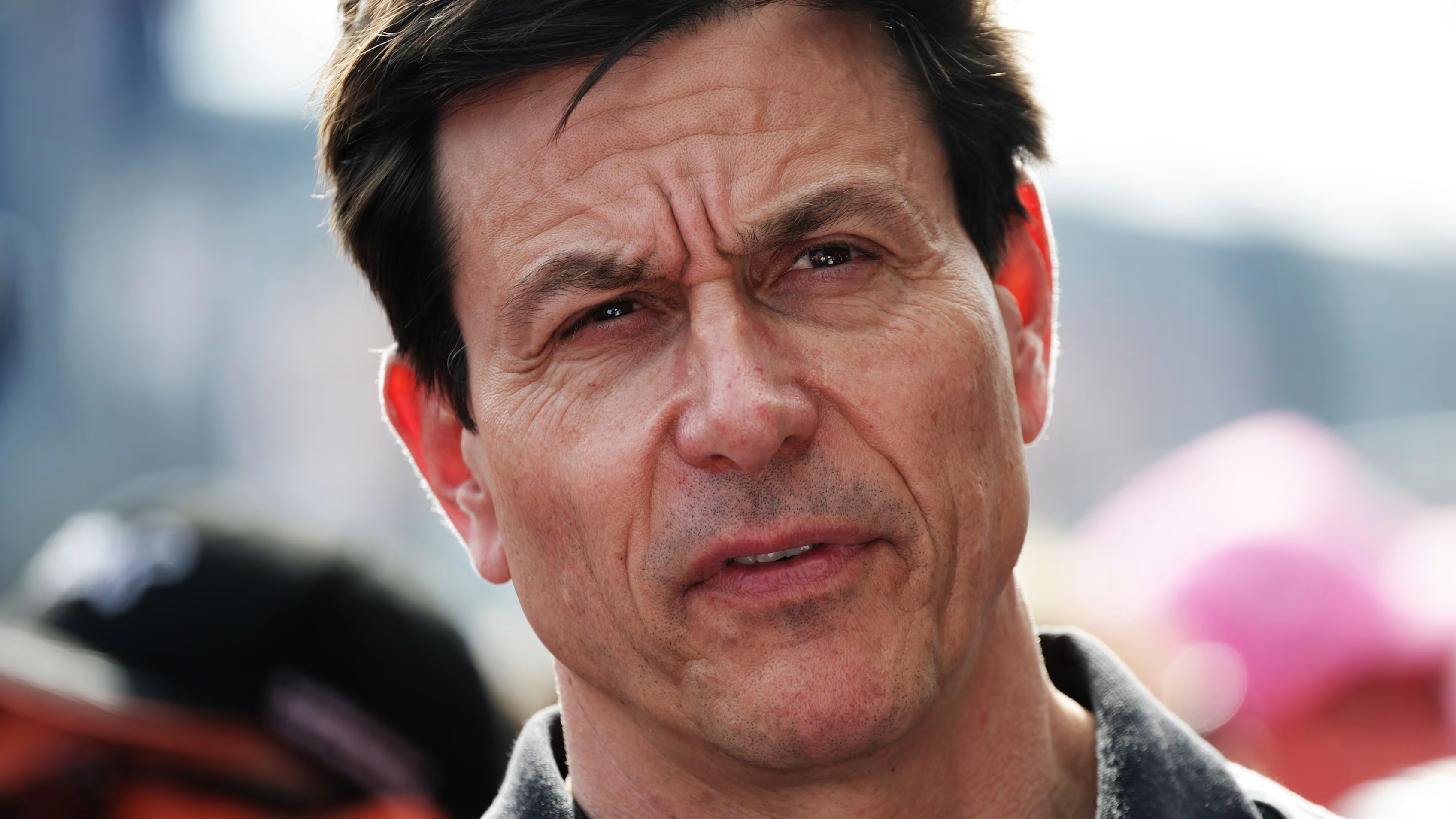
Mercedes F1 finances put 2026 title fight at risk as Toto Wolff admits: “We don’t have the money” as Mercedes’ early dominance fades – Mercedes appeared to have the 2026 Formula 1 championship under control after a dominant opening to the season. The Silver Arrows combined a strong chassis with what looked to be the best power unit and secured six consecutive victories before their winning run ended in Barcelona.
Since then, however, the competitive picture has changed significantly. Mercedes has managed just two victories across the last six races, while Ferrari and McLaren have taken two wins apiece. The development battle has therefore become increasingly important as the season progresses.
Mercedes team principal Toto Wolff believes the reason for his team’s loss of performance is straightforward: the team does not have enough money available to match the development rate of its rivals.
Wolff points to Mercedes’ development budget
Speaking at the Dutch Grand Prix in Zandvoort, Wolff was unusually direct when asked how Mercedes had lost its advantage so quickly.
“We don’t have the money to invest in car development,” the Mercedes boss said.
The comments highlight the importance of development spending during the 2026 season. Rather than introducing major upgrade packages in large steps, Mercedes has chosen to bring smaller improvements throughout the campaign.
That approach contrasts with Ferrari and McLaren, both of whom have introduced more substantial performance upgrades since the Canadian Grand Prix.
Ferrari and McLaren have closed the gap
The consequence has been a narrowing of the performance gap at the front of the Formula 1 field. While Mercedes initially benefited from having a highly competitive package, Ferrari and McLaren have progressively improved their cars.
Wolff described the situation as a development race in which every major upgrade can have an immediate impact on lap time.
“That’s why it’s a development race,” Wolff explained. If a team brings an upgrade, it brings “at least a few tenths” of a second time gain, he calculated.
The Austrian therefore accepts that Mercedes faces a more difficult challenge than it did at the beginning of the season.
“So, yes, the road ahead is a bit tougher than at the start of the season,” Wolff admitted.
Mercedes could be relying on rivals’ budgets
Mercedes’ strategy could ultimately depend on how long Ferrari and McLaren can continue funding their development programmes at the current rate.
With the championship battle becoming increasingly competitive, the ability to introduce performance upgrades could prove just as important as the initial strength of each team’s 2026 package.
Mercedes therefore faces a difficult balancing act. The team must continue developing its car while operating within its available resources, knowing that Ferrari and McLaren are already demonstrating the benefits of sustained investment.
Mercedes dominated when its initial package was clearly ahead, but this is exactly why the development race matters so much in F1. Wolff publically annoucing the money constraints at this stage of the season, expect some finger pointing later on about overspending by rival teams.
Would you like to see more TJ13 Formula 1 coverage? Add us to your favourites list on Google to receive trusted F1 news.

The Judge, a nom de plume of an experienced F1 journalist and site founder with long-standing sources across the paddock. With over 30 years of experience in Formula 1 as an insider journalist, I have built trusted connections across the paddock, from race engineers and mechanics to senior team figures. At The Judge 13, I and a handful of trusted colleagues share exclusive Formula 1 news, expert analysis and behind-the-scenes stories you will not find in mainstream motorsport media.

Alex Stanton is a Formula 1 journalist at TJ13 with a focus on the financial and commercial dynamics that underpin the sport. Alex contributes reporting and analysis on team ownership structures, sponsorship trends, and the evolving business model of Formula 1.
At TJ13, Alex covers topics including manufacturer investment, cost cap implications, and the strategic direction of teams navigating an increasingly complex financial environment. Alex’s work often examines how commercial decisions translate into on-track performance and long-term competitiveness.
With a strong interest in the intersection of sport and business, Alex provides context around Formula 1’s global growth, including media rights, expansion markets, and manufacturer influence.
Alex’s reporting aims to explain the financial realities behind headline stories, helping readers understand how money, governance, and strategy shape the competitive order in Formula 1.
