

Max Verstappen’s RB22 weight exposed in Chinese GP pit lane snapshot – A revealing image from the Chinese Grand Prix has sparked fresh debate about how far behind the pace Max Verstappen and Red Bull Racing might be in 2026.
Originally posted on X, the image appears to show the Red Bull RB22 on the FIA weighbridge after running, with figures that suggest the car is well above the minimum weight limit. While the exact figures remain unofficial, the snapshot aligns with growing whispers in the paddock that Red Bull’s challenger is one of the heaviest cars on the grid.

How much is too much? The performance impact of excess weight
In Formula 1, weight translates directly into lap time. Even small increases can have a measurable effect, particularly over a qualifying lap.
A widely accepted rule of thumb in the paddock is that every kilogram of extra weight can cost roughly three hundredths of a second per lap. Extrapolating this, a 20 kg surplus could equate to around six tenths, a significant deficit in modern Formula 1, where grids are often separated by less than a second.
This could explain why Verstappen has struggled to match the outright pace of rivals such as the Mercedes-AMG Petronas Formula One Team and the Scuderia Ferrari over a single lap so far this season.
However, there is still some uncertainty. Without a full dataset of every car’s weight, comparisons remain speculative. It’s possible that multiple teams are running overweight cars early in this new regulation cycle, though Red Bull appears to be among the worst affected.
Waché admits Red Bull’s weight struggles
TJ13 understands that Red Bull technical director Pierre Waché has already acknowledged the issue internally.
“We have some challenges with the weight of the car, just like the other teams. There’s a chance some others have it a bit better than us. From our side, we need to slim down the car, so that future updates can focus on making the car faster rather than making it potentially lighter.”
This admission is significant. It confirms that weight reduction is currently a key development priority, which could delay performance upgrades while engineers focus on getting the RB22 closer to the limit.
MORE F1 NEWS – Mercedes will provide Verstappen “the very best of the best” car
Where is the extra weight coming from?
The exact reasons for the excess mass remain unclear, but early indications suggest a combination of factors rather than a single issue is responsible.
The chassis and suspension have been identified as potential contributors, and the all-new power unit, developed under the latest regulations, could also be a factor. Cooling systems, battery packaging and structural reinforcements may all be adding incremental weight, which collectively pushes the car well over the target weight.
This wouldn’t be unprecedented. At the start of previous regulation cycles, teams have often used heavier, more robust components before gradually refining them into lighter, more optimised designs as the season progresses.
MORE F1 NEWS – FIA consider allowing F1 testing to replace Bahrain and Saudi GP’s
Is this an opportunity or an underlying concern?
However, there is a silver lining for Red Bull. Excess weight represents ‘free lap time’ if it can be removed. Unlike aerodynamic limitations or conceptual flaws, weight can often be reduced through iterative updates.
However, this optimism comes with a caveat. If rivals are also improving and are already closer to the weight limit, Red Bull risks falling further behind, despite making gains.
The situation is particularly frustrating for Verstappen. Even marginal improvements could bring him back into contention, but until the RB22 sheds its excess weight, he may continue to struggle against lighter, more refined machinery.
With development now paramount, the upcoming races will reveal whether Red Bull can engineer another mid-season turnaround or if this weight issue represents a fundamental limitation of their 2026 concept.
Would you like to see more TJ13 Formula 1 coverage? Add us to your favourites list on Google to receive trusted F1 news.
NEXT ARTICLE – Formula One 2026: Entertainment or Sport?
Two race weekends down and the all new Formula One 2026 regulations have indeed had the biggest impact on the sport since its inception. As happened last time the engine rules were radically changed in 2014, it is Mercedes who have turned out on top. That said, Ferrari too have done a decent job as they sit second behind the silver arrows in the constructors’ championship.
For the rest of the field, the picture is not so rosy. If we tot up the points scored by the other nine constructors they total just four more than the Scuderia have accumulated across two races weekends.
Of course, it was expected there would be big winners and losers but presently the championships look to be a race between Ferrari and Mercedes, with the latter looking the stronger of the two.
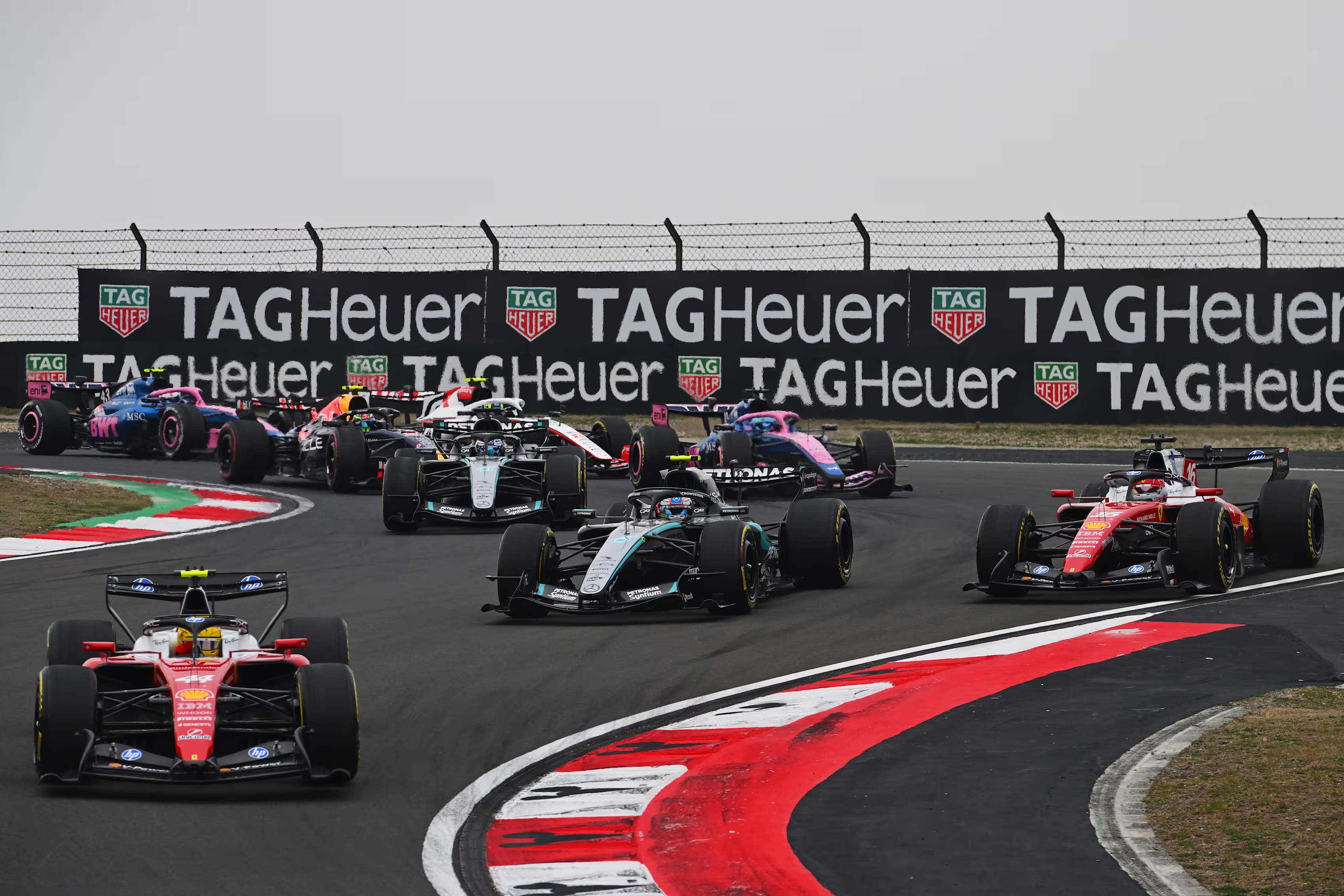
FIA pause rule changes before Japan
The Sprint weekend in China happens to have settled some of the nerves up and down the paddock, as the expected emergency rule changes before Japan in less than two weeks time have been put on hold. Concerns remain that the disparity of performance between a car out of electrical power and one using its electrical boost systems are creating huge speed differentials which could result in a massive accident.
Then there’s the unwanted spectacle of drivers ‘going slow, to go fast’ in qualifying and the much criticised need to ‘lift and coast’ when in previous generations the cars would be flat out approaching a corner.
Unsurprisingly, Mercedes boss Toto Wolff believes on the whole the new regulations are working well, but given his drivers have won all three races to date, why would he say otherwise? “Qualifying flat-out would be nice. But when you look at the fans and the…CONTINUE READING THIS STORY

The Judge, a nom de plume of an experienced F1 journalist and site founder with long-standing sources across the paddock. With over 30 years of experience in Formula 1 as an insider journalist, I have built trusted connections across the paddock, from race engineers and mechanics to senior team figures. At The Judge 13, I and a handful of trusted colleagues share exclusive Formula 1 news, expert analysis and behind-the-scenes stories you will not find in mainstream motorsport media.

Alex Stanton is a Formula 1 journalist at TJ13 with a focus on the financial and commercial dynamics that underpin the sport. Alex contributes reporting and analysis on team ownership structures, sponsorship trends, and the evolving business model of Formula 1.
At TJ13, Alex covers topics including manufacturer investment, cost cap implications, and the strategic direction of teams navigating an increasingly complex financial environment. Alex’s work often examines how commercial decisions translate into on-track performance and long-term competitiveness.
With a strong interest in the intersection of sport and business, Alex provides context around Formula 1’s global growth, including media rights, expansion markets, and manufacturer influence.
Alex’s reporting aims to explain the financial realities behind headline stories, helping readers understand how money, governance, and strategy shape the competitive order in Formula 1.
