
Mercedes have been frugal with their upgrades to their 2026 W17 Formula One race car. Whilst most other teams brought extra performance to their cars early in the season, the Brackley-based squad waited until round 6 in Canada before the first changes came to their car.
The result was the expected gains correlated with the on-track performance, and Kimi Antonelli claimed the sixth win for the Silver Arrows of the year. Next time out in Monaco, Antonelli was once again on the top step of the podium, but Ferrari were on the comeback trail at the following round in Barcelona.
From the race in the Catalan capital, the next ten rounds saw a Mercedes driver win just five of the ten rounds, with Lewis Hamilton and Charles Leclerc winning a race each, Lando Norris bagging a pair in Belgium and Hungary, and now, following the rearranged Grand Prix, Max Verstappen and Red Bull have their first wins of the year.
Rival Momentum and Red Bull’s Surge
McLaren’s upgrade came in Hungary, which brought about Norris’ first win as champion, and continued after the summer break. Only a cruelly timed virtual safety car robbed Lando of a win at Madrid, before Mercedes returned, winning a brace in Spain and Azerbaijan.
The Azerbaijan affair was a win for George Russell, but as Verstappen demonstrated driving through the field to finish 0.1 seconds behind the Mercedes driver, a better qualifying session and Grand Prix in Baku may have had a very different winner.
Red Bull brought its final set of big upgrades to their RB22 for Baku, and the difference was instantaneous. The simulated increase in performance was even exceeded by the Milton Keynes team. However, the story was quite different for Mercedes, as their second and final big improvements to the car in Malaysia were a miserable failure.
The Malaysian Upgrade Backfire
The paddock was abuzz with expectation for the Mercedes upgrades, with even talk of it improving the car by some half a second mooted in Baku. Yet the team principal was forced to concede it may have made the car slower by “3/10ths, 4/10ths or even 5/10ths of a second.”
There was an air of bemusement which ran through the Mercedes race team in Malaysia, as the upgrades had in part delivered what was expected—more performance through the high-speed corners. However, the low-speed corners had been compromised, and the extra downforce appeared to slow the car on the straights when compared to Red Bull and McLaren.
Confused over what happened, deputy team principal Bradley Lord suggested it could all come down to the characteristics of the Sepang circuit and the weather conditions. Hardly a reply that instils confidence that the Silver Arrows will find solutions in just five days before the Singapore Grand Prix—where most of the corners are slow.
Mixed Explanations from the Paddock
When asked about why the W17 appeared slower on the straights, deputy team principal Bradley Lord replied: “That’s probably one of the lesser question marks. We know that adding downforce brings with it drag, and the calculation is that what you gain in the corners will outweigh what you lose down the straights.
“We’ve seen what we’re expecting there, we’re seeing the benefit in the high-speed corners and the medium-speed—and the drivers say they can feel it as well. But there’s no doubt that we’ve struggled in certain corners all weekend, particularly the slower ones.”
Kimi Antonelli appeared to believe it was the nature of the asphalt which held his team back when asked what had changed from Baku to Kuala Lumpur in a week: “That’s the question we need to answer because we don’t really know if it made us go faster or worse.
“It’s fair to say, this season that whenever we went on really old tarmacs, we’ve struggled. For example, in Zandvoort, McLaren was much quicker than us, especially on the older tarmac. So, I think maybe it’s just a question that the tarmac is just very old and that for the tyres it’s very, very hard, and maybe we just struggle on this kind of tarmac.”
Budget Constraints and Omitted Tests
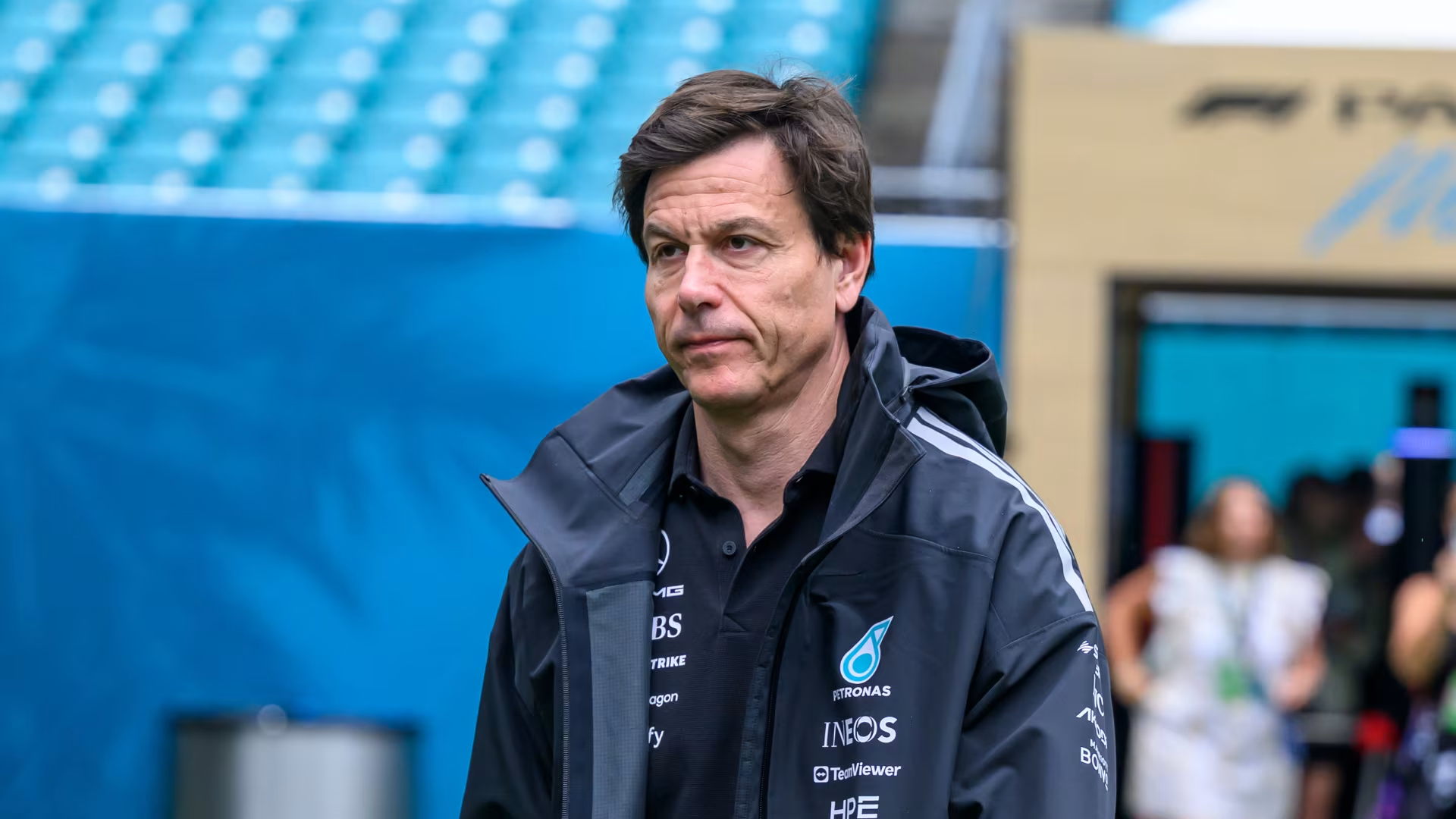
Mercedes have been hard-pressed all season to bring upgrades to their car, with Toto Wolff sounding off in the summer over the number Ferrari were bringing to their SF-26. “We just can’t afford to do that,” said the Austrian. Another strange event occurred in Sepang: George Russell was asked why he would not be wearing a cooling vest for the race. He replied that the team had “preferred to use the budget to put performance on the car.”
Quite a strange reply when the cooling jacket system comprises a simple water pump, a sump for dry ice, and a vest with micro tubing inside. It surely costs way less to produce than a new front wing.
Another sign Mercedes were under pressure is they failed to test their upgrade during the practice session in the same fashion McLaren, Red Bull, and Ferrari have done all year. The other teams have run their upgraded cars against the baseline old-spec car in at least one practice session, with McLaren taking three race weekends before they were happy with a front-wing upgrade.
A Difficult Decision Ahead for Singapore
Mercedes appear to have rushed this through, or were so overconfident in their ability to deliver a first-time-out perfect set of upgrades. Now they have a couple of choices in front of them: debrief like hell this week and try again in Singapore, but the issue the coming weekend is a Sprint event with just one practice session.
If the upgrades have made them slower in the low-speed corners, the logical thing to do given the lack of time in front of them would be to return to the old-spec car. Yet logistical and production capabilities may mean this is not possible—with the factory now delivering the upgrade parts, not the older specification.
So it could be as late as Austin, Texas, before Mercedes can run an upgraded car against the older spec, as F1 returns to a regular weekend with three practice sessions. Whichever way Toto and his team choose to go, the second and final Mercedes upgrade of the year has been a huge embarrassment to their engineering talent, and the team appear to have been too desperate to just get it on the car and go.
Would you like to see more TJ13 Formula 1 coverage? Add us to your favourites list on Google to receive trusted F1 news.

The Judge, a nom de plume of an experienced F1 journalist and site founder with long-standing sources across the paddock. With over 30 years of experience in Formula 1 as an insider journalist, I have built trusted connections across the paddock, from race engineers and mechanics to senior team figures. At The Judge 13, I and a handful of trusted colleagues share exclusive Formula 1 news, expert analysis and behind-the-scenes stories you will not find in mainstream motorsport media.
